Drip Irrigation vs. Sprinkler Systems: Finding the Right Fit for Your Farm
Understanding the Basics of Irrigation Systems
Irrigation is a critical component of effective farm water management, ensuring that crops receive the necessary hydration for optimal growth. Among the various methods of irrigation, drip irrigation and sprinkler systems are two of the most popular choices. Each has its distinct advantages and disadvantages, making the decision of which system to implement significant for any farming operation.
Drip Irrigation: An Efficient Approach
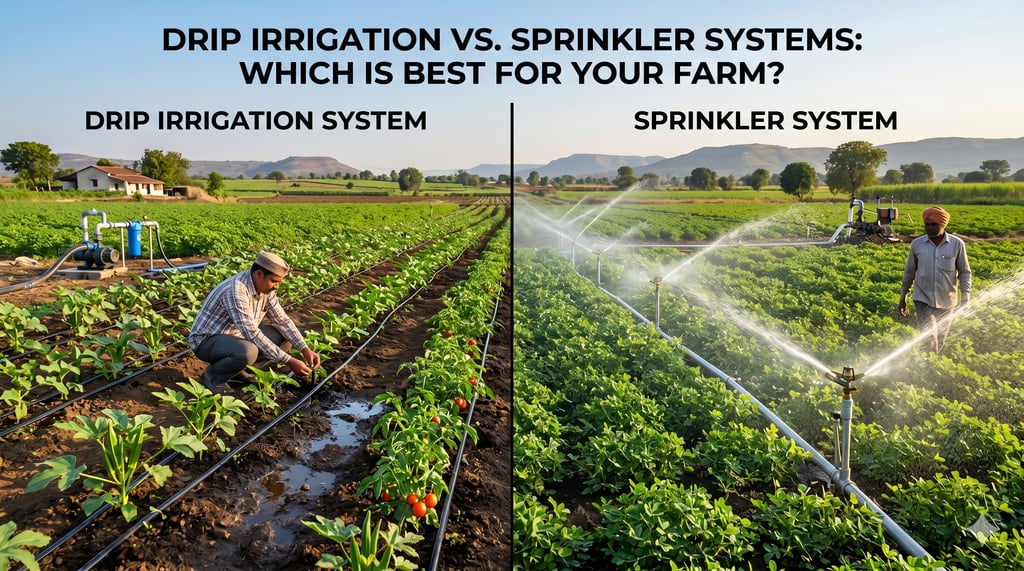
Drip irrigation is an innovative water management technique that delivers water directly to the plant's root zone using a network of tubing and emitters. This method minimizes evaporation and runoff, making it particularly efficient in arid regions or during periods of low rainfall. By applying water directly where it is needed, drip irrigation significantly reduces water use compared to traditional methods.
One of the primary benefits of drip irrigation is its ability to improve crop yield and health. The precise control over water application leads to better growth conditions for plants, which can result in higher quality produce. Additionally, drip systems can be easily tailored to the specific needs of various crops, allowing farmers to maximize their investment in irrigation technology.
Sprinkler Systems: Flexibility and Coverage
Sprinkler systems, on the other hand, use a series of pipes and sprinkler heads that spray water over larger areas, simulating natural rainfall. This system is highly versatile and can be used across a wide range of farm types, from orchards to grass pastures. A major advantage of sprinkler irrigation is its ability to cover large areas quickly, making it ideal for farms with diverse crop layouts.
Notably, sprinkler systems are easier to install and operate than drip systems, particularly for larger farms where extensive network setups might be impractical. However, they can create water waste due to evaporation and wind drift, especially in hot or windy conditions, which might necessitate adjustments to watering schedules and amounts.
Choosing the Right System for Your Farm
When deciding between drip irrigation and sprinkler systems, several factors should be considered, including crop type, soil characteristics, cost, and water availability. Drip systems may involve higher initial setup costs but often result in long-term savings due to reduced water usage and increased crop efficiency. Conversely, sprinkler systems may provide a lower initial investment and faster installation but could incur higher operational costs over time due to water waste.
Ultimately, the choice between drip irrigation and sprinkler systems depends on the unique needs of your farm. Evaluating your specific circumstances, including climate, crop requirements, and budget, will help you make an informed decision that enhances your farm water management practices.
Sitemap
Home
Our Legacy
Specifications
Global Trade
Contact
Global Trade Desk
info@revairrigation.com
Padma Plast, V-13, Near MSWC, MIDC
Maharashtra, India - 425003
© 2026 REVA Irrigation-Padma Plast. Established 2000.
ISI-Certified Precision