
Maximizing Crop Yields with Flat Drip Irrigation Systems
Understanding Flat Drip Irrigation Systems
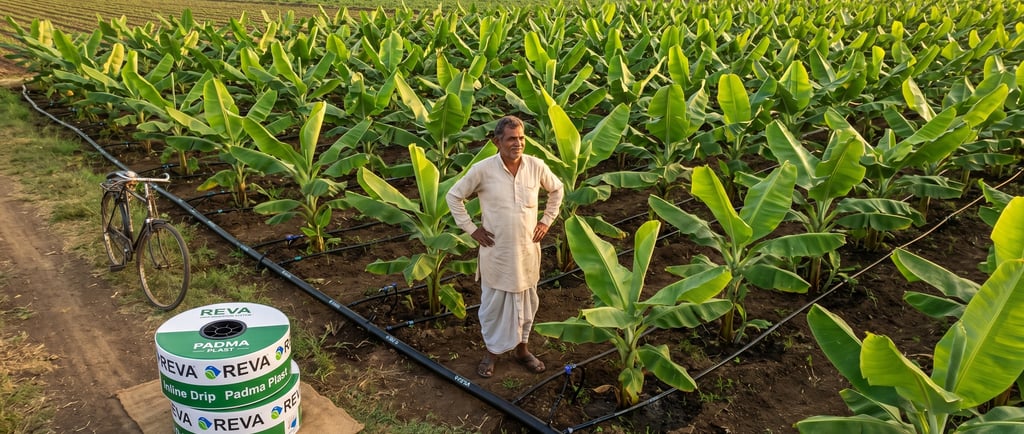
Flat drip irrigation systems represent an advanced method of delivering water directly to the plant roots, substantially enhancing water conservation when compared to traditional irrigation approaches. Unlike conventional methods that utilize sprinklers or surface watering, flat drip systems employ a network of tubes and emitters strategically positioned throughout the crop area. This targeted approach not only reduces water wastage but also decreases evaporation, leading to more efficient water use.
A typical flat drip irrigation setup consists of several essential components, including a mainline distribution pipe, submains, drip tubing, emitters, and filtration systems. The mainline serves as the primary conduit for water, while the submains branch off to connect with the drip tubing laid along the rows of crops. Emitters, which are fixed along the tubing at specified intervals, are calibrated to release a precise quantity of water directly at the root zone of the plants, promoting optimal growth and crop health.
Installation of a flat drip irrigation system involves several key steps. First, a comprehensive assessment of the field is conducted to determine layout and emitter spacing, tailored to the specific crop requirements. Once the design is finalized, the underground infrastructure is typically set up with careful attention to gradients to ensure gravitational flow where applicable. Filters are attached to prevent clogging of emitters from particulate matter and debris in the water source. This emphasis on precision not only maximizes efficiency but also helps in mitigating common irrigation challenges such as uneven moisture distribution.
The functionality of flat drip systems is further enhanced by their ability to integrate with automated irrigation controls. This provides farmers with the capability to program watering schedules based on evolving weather conditions, thereby aligning water application with crop needs.
Benefits of Flat Drip Irrigation for Crop Yield Optimization
Flat drip irrigation systems represent a transformative approach to agricultural water management, particularly in enhancing crop yields. One of the notable advantages of flat drip irrigation is its ability to deliver precise amounts of water directly to the plant roots. This targeted delivery promotes better root development, which is a critical factor in the overall growth and health of crops. When plants receive adequate moisture at the root zone, they can more effectively absorb nutrients from the soil, leading to improved plant growth and productivity.
Research indicates that flat drip irrigation can significantly enhance crop yields compared to traditional irrigation methods. For instance, studies have shown that crops under flat drip irrigation conditions can experience yield improvements of up to 30% or more, depending on the crop type and environmental conditions. This increase in yield is often attributed to the optimized use of water and nutrients, which supports healthier plant development.
Furthermore, flat drip irrigation systems can effectively suppress weed growth by limiting moisture availability to areas outside the crop root zone. This not only reduces competition for resources but also lessens the need for chemical herbicides, promoting a more sustainable agricultural practice. Additionally, owing to the efficiency of water usage in flat drip irrigation, farmers can conserve water resources, an increasingly crucial factor in the face of climate change and water scarcity issues.
Moreover, the adoption of flat drip irrigation contributes positively to soil health by minimizing erosion and runoff. Improved soil structure and moisture retention further enhance the soil's fertility and long-term viability for crop production. In conclusion, the multifunctional advantages of flat drip irrigation systems—including precise water delivery, improved nutrient uptake, and sustainable practices—make them an invaluable tool for optimizing crop yields in modern agriculture.
Best Practices for Implementing Flat Drip Irrigation
To successfully implement flat drip irrigation systems, it is essential for farmers and agricultural professionals to consider various best practices that ensure optimal functionality and crop yield. Initially, understanding soil types is pivotal. Different soils have varying retention capacities and drainage characteristics, which can significantly influence irrigation performance. For instance, sandy soils may require more frequent watering in smaller amounts, while clay soils retain moisture for longer durations. Conducting a thorough soil analysis will allow for tailoring the irrigation system to meet specific water needs effectively.
Crop selection also plays a critical role when implementing flat drip irrigation. Selecting crops that are best suited for the local climate and soil conditions will lead to higher yields. Certain crops thrive in specific moisture conditions; hence, employing flat drip irrigation can help achieve the precise moisture levels required, reducing water consumption and minimizing nutrient loss. Additionally, ensuring the field layout considers sun exposure and wind direction will enhance water efficiency and crop growth.
When designing a flat drip irrigation system, proper spacing and emitter output need careful consideration. Uniform emitter distribution is vital to achieve effective water application across the field. Regular maintenance, including cleaning filters and checking emitters for clogs, is crucial to sustain optimal performance. Furthermore, utilizing seasonal adjustments—switching irrigation schedules as weather changes—can help conserve water and encourage healthy crop development.
Lastly, integrating flat drip irrigation with other farm management practices will lead to a holistic approach to agriculture. Combining this irrigation system with precision farming techniques, soil moisture monitoring, and crop rotation strategies can help farmers maximize their resource use. By adhering to these practices, agriculture professionals can harness the full potential of flat drip irrigation systems and significantly enhance crop yields.
Case Studies and Success Stories
Numerous agricultural operations have embraced flat drip irrigation systems, reporting transformative results that underline their efficacy. For instance, a farmer in California specializing in tomato cultivation faced significant water scarcity and declining yields. Initially, the traditional irrigation methods used were inefficient and wasteful, leading to heightened production costs and environmental concerns. After transitioning to a flat drip irrigation system, the farmer observed immediate changes. The installation process required investment in infrastructure but proved invaluable as it allowed for precise water delivery directly to the roots of the plants.
The outcome was substantial. The farmer reported a yield increase of approximately 30% in the first year of implementation. Additionally, water usage decreased by 40%, demonstrating the system's advantage in resource management. This example highlights how adapting to innovative irrigation technology not only mitigated existing challenges but also contributed to sustainability goals.
Another compelling case is found in the vineyards of Australia, where a wine producer faced challenges with inconsistent water supply and variable soil properties. They began adopting flat drip irrigation, which provided a uniform and controlled water application. Initial hurdles included educating the staff about the new system and managing installation logistics. However, with expert consultations and a phased approach to implementation, the vineyard optimized its irrigation practices within a short period.
This transition resulted in an increase in grape quality, leading to higher market prices for their wine. The vineyard noted improvements in soil health over time, with signs of enhanced microbial activity and better moisture retention, reinforcing the benefits of flat drip irrigation systems.
Both case studies underscore the remarkable adaptability and effectiveness of flat drip irrigation in improving crop yields and resource management, serving as motivational examples for farmers considering similar systems. Lessons learned emphasize the importance of thorough planning, investment in technology, and ongoing education for long-term success in sustainable agriculture.
Sitemap
Home
Our Legacy
Specifications
Global Trade
Contact
Global Trade Desk
info@revairrigation.com
Padma Plast, V-13, Near MSWC, MIDC
Maharashtra, India - 425003
© 2026 REVA Irrigation-Padma Plast. Established 2000.
ISI-Certified Precision